


Tina Payne Bryson, PhD
New York Times bestselling co-author of The Whole-Brain Child, founder of The Center for Connection, and one of the most recognized voices on the developing brain. Her books have sold over four million copies in 60+ languages.
The Florida Keys – Islamorada – The Three Waters Resort
February 8-10, 2027

Islamorada, Florida
The Three Waters Resort
February 8-10, 2027
12 APA / ASWB Approved CE
The Way of Play with Tina Payne Bryson, PhD
A continuing education program suited to the sun, sand, tides, and coral reefs the Florida Keys have to offer. Play pulls our brain out of goal-driven mode and into a looser and more creative state of mind — and it’s not just for kids. Adults who make room for play tend to carry less stress, solve problems more nimbly, and connect more easily with the people around them. Whether you work with children, teens, or the parents raising them, join us in developing the Way of Play mindset.

The Way of Play
The Science and Practice of Restoring Playfulness for Ourselves & Our Clients
with Tina Payne Bryson, PhD
Play is not merely an activity or a therapeutic technique; it is a way of being. It’s a relational and neurobiological process through which human beings develop regulation, flexibility, connection, resilience, and integration.
Drawing from The Way of Play, interpersonal neurobiology, attachment science, developmental research, and principles from The Whole-Brain Child, this workshop will examine how play shapes the developing mind and continues to support well-being across the lifespan.
Participants will learn seven practical, relationship-based strategies for helping children and families build emotional awareness, regulation, empathy, resilience, narrative coherence, and flexible problem-solving, while also considering how these same processes can deepen therapeutic presence and restore clinicians’ own capacity for curiosity, openness, and vitality.
Teaching will be grounded primarily in science, clinical examples, demonstrations, and practical application, and we’ll weave together reflective and playful experiences for our own wellbeing
The Way of Play — by the Day!
What to Expect
Arrival is a new beginning — an afternoon start, easing in, getting oriented to the place and to each other, ending with a sunset social. It’s the day of opening and settling. We begin with a foundational question: what is play— and what happened to ours? Participants will be introduced to play as a relational and neurobiological process, and will begin to consider their own curiosity, openness, and vitality as clinical resources. The day is grounded in science and brought to life experientially.
12:15 – 1:00 PM Check-In and Welcome Gathering and settling: Destination Psych CE registration, introductions, and orientation to our beautiful space and our learning journey ahead.
1:00 – 2:45 PM The Problem with Play as a Technique (1.75 CE) Why treating play as an intervention narrows what it can do. Differentiating play as an activity, a subjective state, a neurophysiological state, a developmental process, and a relational experience — and why the distinctions matter clinically.
2:45 – 3:00 PM Break
3:00 – 5:00 PM How Play Builds a Mind (2 CE) Play as an integrating force across brain, body, mind, and relationships. How play contributes to emotional regulation, executive functioning, social understanding, creativity, and resilience — in childhood and across the lifespan. Interpersonal neurobiology, attachment science, and developmental research explored through demonstration and shared practice.
5:00 – 5:15 PM Reflection and Close (.25 CE) Brief structured reflection. Questions and close of formal instruction for our first day.
5:15 – 6:30 PM Social Hour (Optional) We welcome you for an informal gathering of fellow travelers to Destination Psych CE. Light refreshments provided as we enjoy the sunset together.
On Tuesday, we dig deeper. An optional morning walk to settle in, then the clinical heart of the workshop — what closes play down, what opens it back up, and the first strategies for making the inner world visible and shareable. The work is experiential throughout: we learn by doing, by noticing, by practicing with each other what we are learning to do with clients and families. Lunch is on-site and unhurried. Then we turn to attunement and emotion — the mirror we become for another person, and the way feelings can be given shape, voice, and story.
8:00 – 9:00 AM Morning Gathering Enjoy breakfast offerings, with flexibility for optional outdoor explorations. Time for dwelling in the seascape or sleeping in and come ready for the day’s learning to begin.
9:00 – 11:30 AM When Play Goes Missing — and What Brings It Back (2.5 CE) How stress, threat, rigidity, disconnection, developmental differences, and environmental context restrict access to play. How adult attunement, co-regulation, curiosity, and relational presence create the conditions in which play and exploration can emerge. Introduction and practice of the Think Out Loud strategy for building awareness of thoughts, feelings, intentions, wishes, and other aspects of the inner world.
11:30 AM – 12:30 PM Lunch A brown bag lunch is provided on-site with views of our stunning surrounds — time to connect, move in nature, and let the morning settle.
12:30 – 2:00 PM Being a Mirror, Bringing Emotions to Life (1.5 CE) The Make Yourself a Mirror strategy for strengthening attunement, emotional understanding, empathy, and relational connection. The Bring Emotions to Life strategy for helping children and families recognize, express, and regulate emotion through symbolic and pretend play. Demonstration, clinical examples, and paired practice.
2:00 PM Afternoon — Free Time The afternoon is yours.
On Wednesday we move toward closure. We begin with an optional morning reflection time, then start the final stretch of work: meeting high and low arousal without losing connection, holding boundaries and stretch in the same hand, and using story to integrate what has been hard. We close by turning the seven strategies back toward ourselves — because a clinician’s own capacity for curiosity, openness, and vitality is not separate from the work. As on every day, the learning is experiential. We close gently, with time for reflection and goodbye. What you carry out is yours to keep.
8:00 – 8:45 AM Morning Gathering Enjoy breakfast offerings, and optional outdoor reflection time before our practice together begins.
8:45 – 10:30 AM Session 5: Turning the Dial — Intensity, Boundaries, and Stretch (1.75 CE) Dial Intensity Up or Down as a response to high- and low-arousal states while preserving connection and engagement. Set Playtime Parameters and Scaffold and Stretch as the pairing of safety, boundaries, flexibility, choice, support, and developmentally appropriate challenge. Demonstrations and structured practice.
10:30 – 10:45 AM Break with light refreshments
10:45 AM – 12:45 PM Session 6: Narrate to Integrate — and the Clinician’s Own Play (2 CE) Using Narrate to Integrate to support narrative coherence, meaning-making, memory integration, and resilience following difficult experiences. Bringing all seven strategies together across children, parents, families, and adult clients — and applying the same underlying principles to therapeutic presence and clinician wellbeing. Closing playful and reflective practice.
12:45 – 1:00 PM Conclusion (.25 CE) Final reflections and integration, evaluations, and close of our shared learning together. Destination Psych CE sends you off with warm wishes… until we meet again!
The Three Waters Resort & Marina
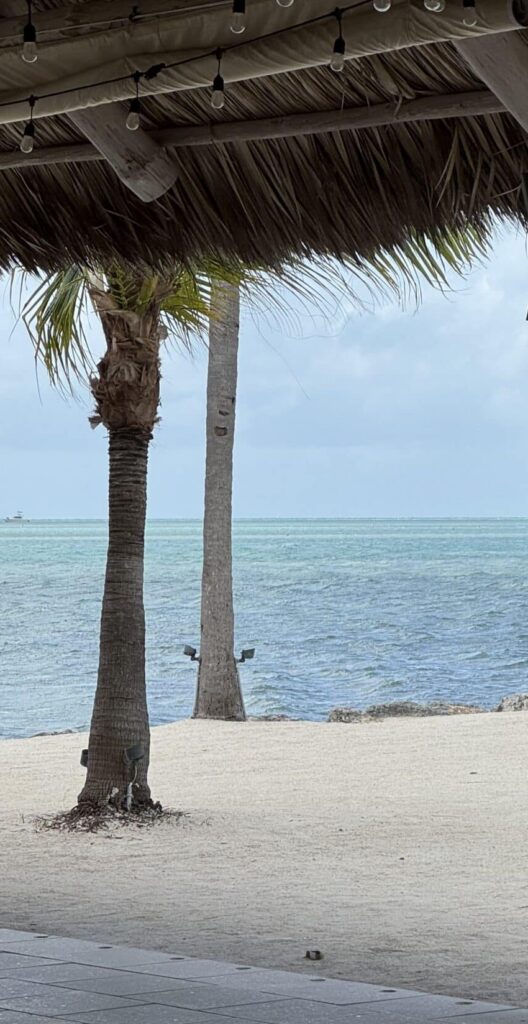
Our home for these three days is Three Waters Resort & Marina, set on fifteen oceanfront acres in the heart of Islamorada. Learning takes place in the Sunrise Tiki–right on the beach, ocean right there!
Island-inspired rooms open onto water in every direction, and your stay includes kayaks, paddleboards, and bikes to explore it. A full-service marina sits at the center of the “Sportfishing Capital of the World,” with captains ready to take you offshore or out to the flats at first light — plus five beaches and pools and a dozen places to eat across the resort and its sister properties.
You’re welcome to book your stay here, but you don’t have to. Sessions are open to anyone registered, whether you’re staying on-site or elsewhere on the island. If you do stay off-property, we’d suggest somewhere within about fifteen to twenty minutes so you’re not fighting the drive each morning.
The Florida Keys sit at a threshold — between the Atlantic and the Gulf, between salt water and fresh, between the continent and the open ocean. The ecosystem mirrors that in-betweenness: the reef, the mangroves, the shallow flats, each with its own invitation to drift and explore. It’s a fitting place to practice playfulness, flexibility, attunement, and presence.
The Freedom to Choose Your Way
The sun will rise at about 7 AM and set just past 6 PM. Some participants may want to enjoy the sun rise from the beach or on the water via Kayak. be on the water by early morning — kayak through a mangrove tunnel, drop a line on the flats before the wind picks up, or follow a guide out to the reef while the light is still low and the fish are moving. Others will find their rhythm later — coffee on a dock, a slow walk, an afternoon snorkel above living coral.
The water is the organizing fact of life here. Turquoise, gin-clear, warm in February when much of the country is a dormant, winter-brown landscape or a frozen block of grey ice. The Keys invite both movement and stillness — a place for people who appreciate that restoration and rigor can work in harmony.
Getting There
Fly into Miami International Airport (MIA) or Fort Lauderdale-Hollywood International Airport (FLL), then rent a car. The drive south takes about two hours to the Upper Keys — and it is worth every minute.
Somewhere around Florida City, the mainland ends. The road narrows. The terrain flattens into something you don’t have a name for until you’re in it — saw grass and open sky, then water on both sides, then a bridge, then another island, then another bridge. The Overseas Highway connects 42 of them across 120 miles of open sea, and there is nothing else like driving it.
Each stretch of the chain has its own character. Key Largo announces the reef — John Pennekamp Coral Reef State Park, the first underwater state park in the country, begins here. Islamorada, known as the Sportfishing Capital of the World, comes next — turquoise water, fishing charters, dockside restaurants with pelicans on the pilings. The Middle Keys open into Marathon and the Seven Mile Bridge, one of the great drives in America, the road appearing to float across open water with nothing but horizon in every direction. The Lower Keys turn quieter, wilder — mangrove mazes, Key deer, skies untouched by city light.

You can move through quickly, or you can stop often. The Overseas Highway doesn’t funnel you. It leaves room.
Prefer to fly directly into the Keys? Key West International Airport (EYW) and Florida Keys Marathon International Airport (MTH) both offer options for those who want to begin their time on the islands immediately.
Option to Extend: Stay Before or After
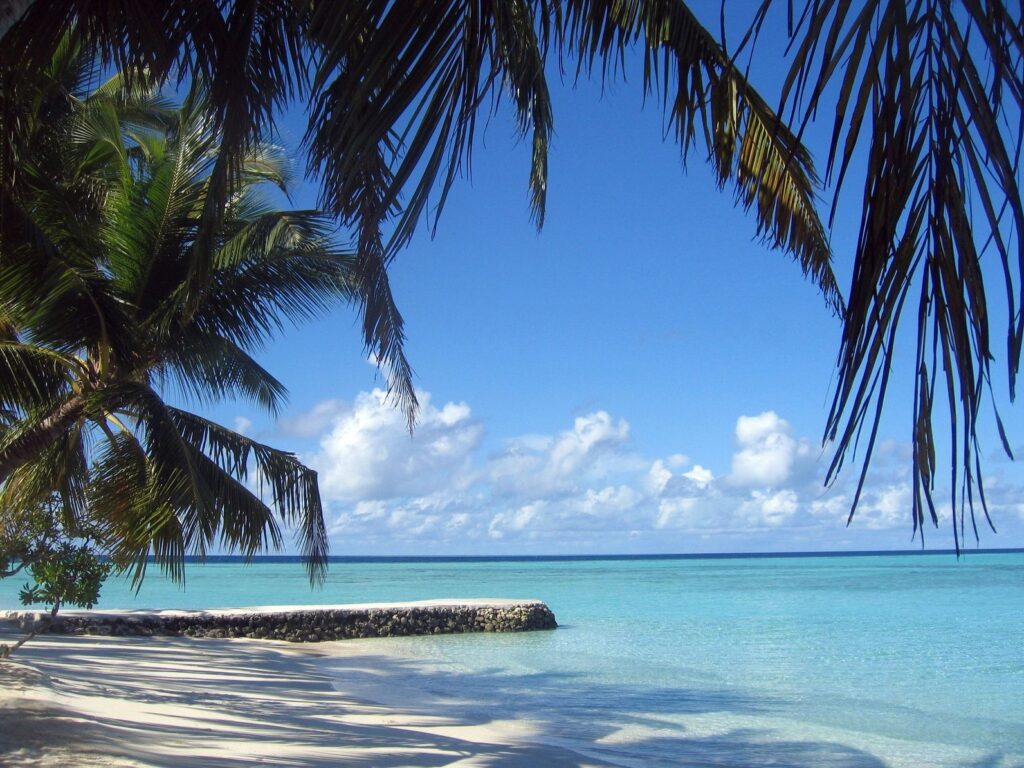
February is the Keys at their finest — dry season, warm but not yet heavy, the water at its most transparent. If you have extra days, the question is simply how to use them.
Some participants will extend north through the chain, moving slowly from key to key, stopping wherever curiosity or the color of the water compels them. Others will stay south — Key West is a world of its own, and it rewards time. Hemingway lived and wrote here. The city once declared itself an independent nation — the Conch Republic — in a dispute with the U.S. government, surrendered immediately, and has been cheerfully sovereign in spirit ever since. Chickens roam the streets. Every evening, crowds gather at Mallory Square to applaud the sunset as though it might not happen again.
Eat well. The stone crab is in season in February. The key lime pie is not optional. Find a dockside table as the light changes and stay a little longer than you planned.
The Keys Work Well for Shared Travel
Some participants arrive with partners, others with children, close friends, or colleagues. While learning sessions are underway, companions have the Keys — which is not a small thing.
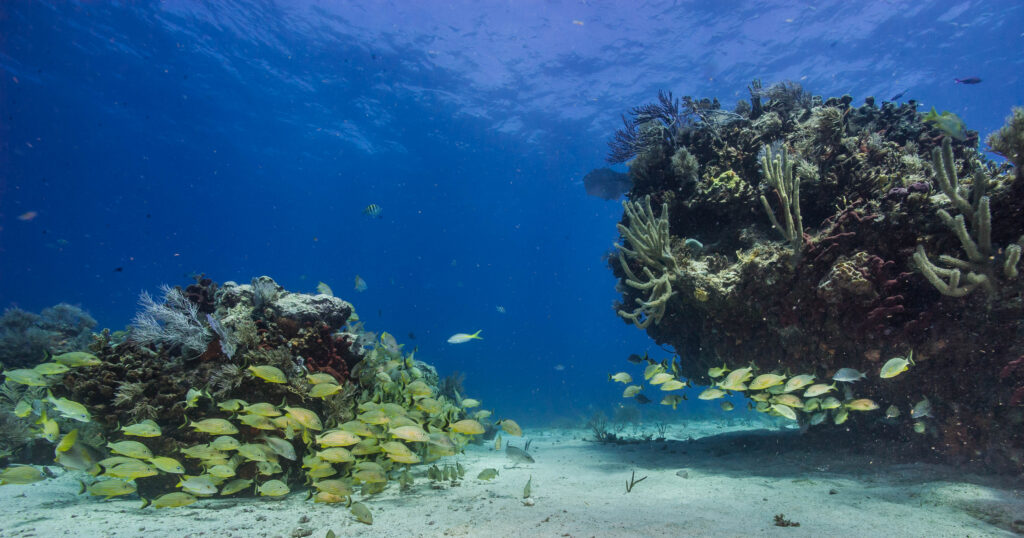
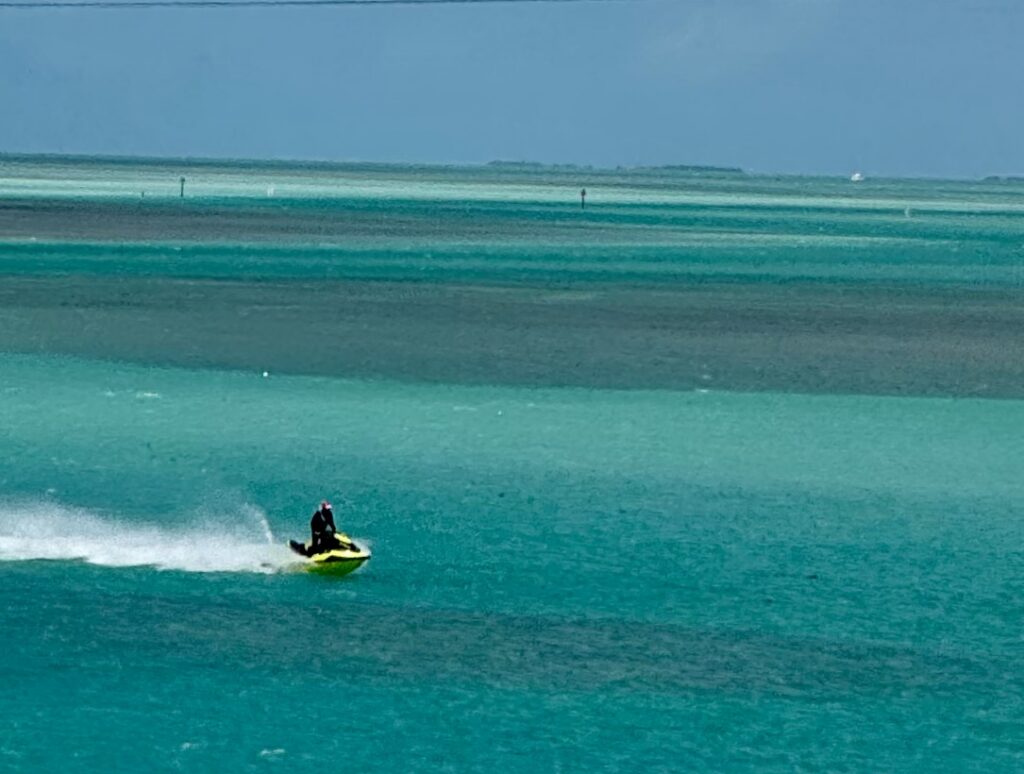
Snorkeling and diving on the only living coral reef in the continental United States. Kayaking and paddleboarding through mangrove backcountry. Fishing charters for every level — offshore bluewater, reef fishing, the quiet precision of fly fishing on the flats. Glass-bottom boat tours. Sunset sails. Dolphin watches. Visits to rescued sea turtles at the Turtle Hospital in Marathon. Wildlife and birding along one of the great migratory flyways in North America. Or simply a hammock, a view of the water, and the particular quality of February afternoon light in the Florida Keys.
There is something here for everyone who comes with someone.
Play Around The Reef
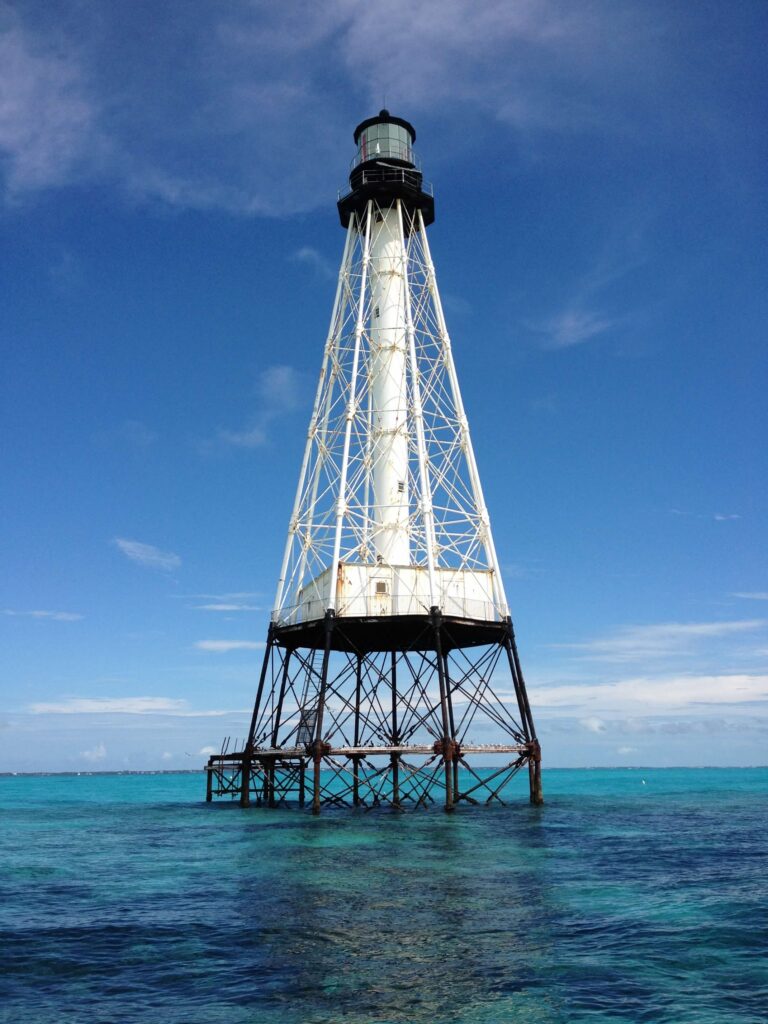
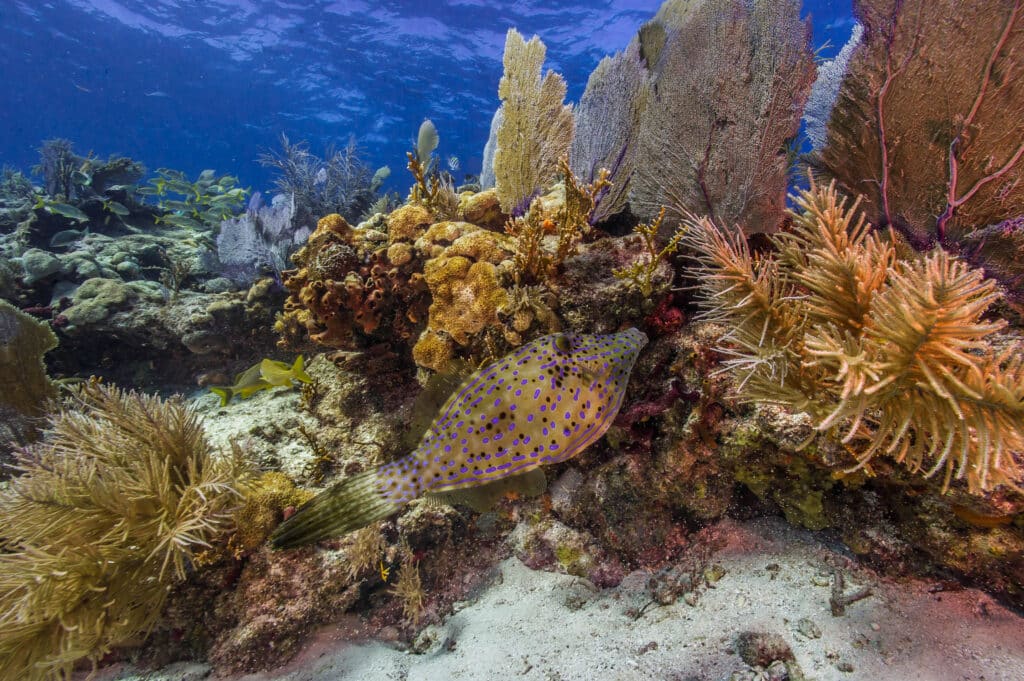
The Florida Reef begins at Fowey Rocks, on the northern boundary of Biscayne National Park, and runs southwest for roughly 170 miles to the Dry Tortugas. It lies several miles seaward of the Keys. Add days at either end of your trip to reach Biscayne, about an hour north on the drive down from Miami, or the Dry Tortugas, seventy miles west of Key West by ferry. Closer in, head right out from Three Waters to Cheeca Rocks, Hen and Chickens, or Alligator Reef, depending on conditions.
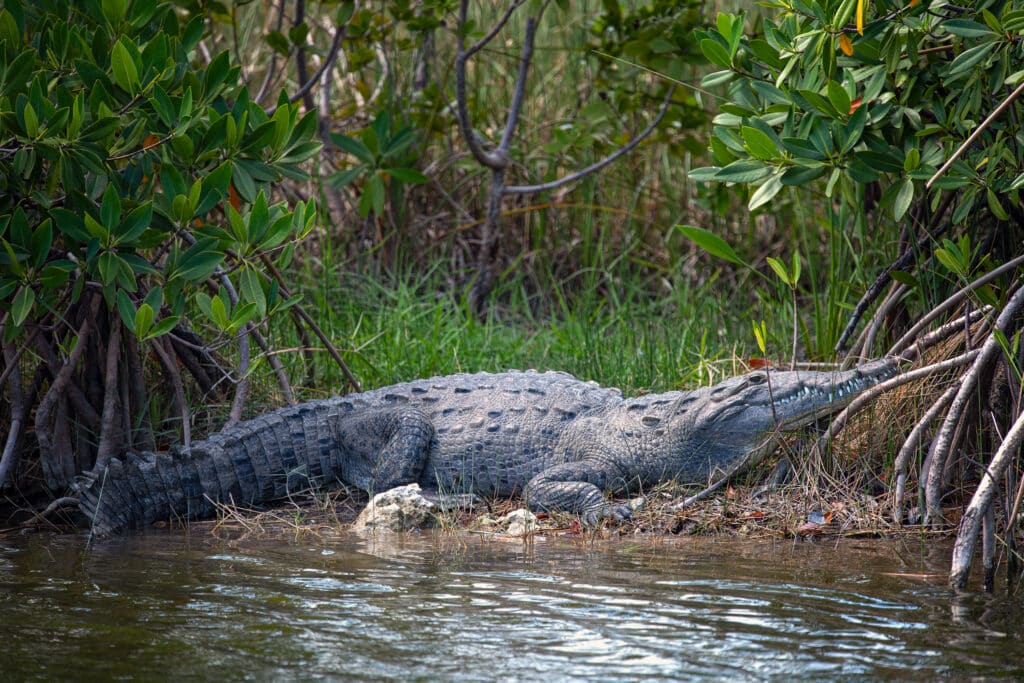
Kayak in The Backcountry
Paddle into a world of mangrove tunnels and shallow tidal flats– perhaps spot an American crocodile lounging on a bank. Biscayne runs guided paddle-and-snorkel trips from Convoy Point, and Everglades National Park has the mangrove trails at Flamingo — Noble Hammock, Hells Bay — thirty-eight miles past the Homestead entrance. Alligators and crocodiles share the water. Go with a guide.
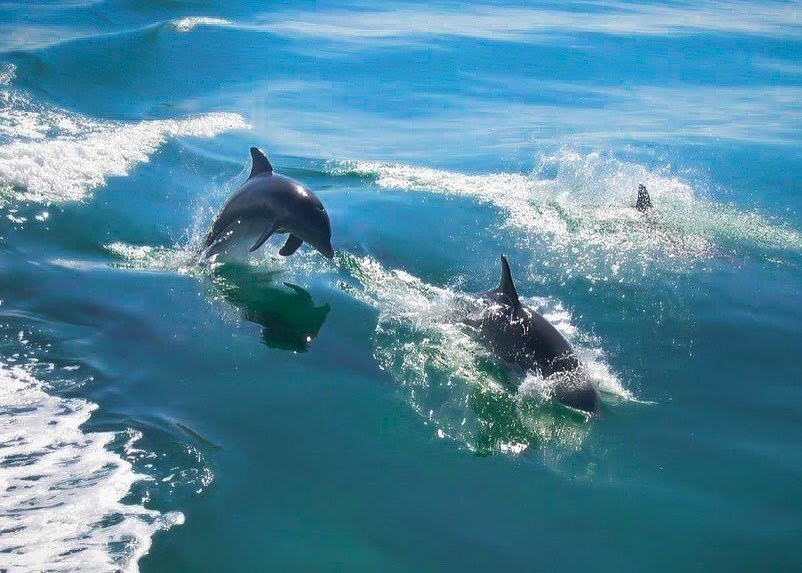
Fishing on The Flats
Islamorada is the Sport Fishing Capital of the World, and the claim holds up — backcountry sport fishing and saltwater fly fishing were both pioneered in these waters. Offshore and backcountry charters leave the marina at Three Waters daily. Abel’s Tackle Box sells bait and supplies at the dock, and Fish Like a Local classes. If that is how you like to play, it is all steps from your room.
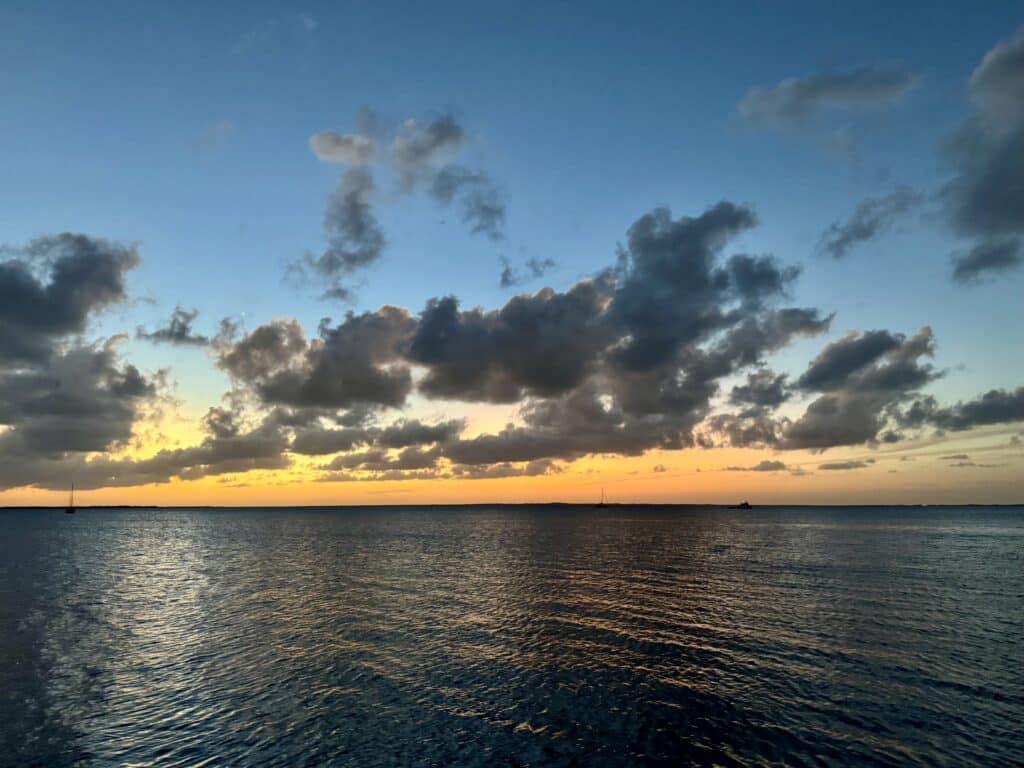
Enjoy The Light
What could beat an ocean sunset? Whether you’re facing the Atlantic or the Gulf, the sky delivers. After a day of play, enjoy dinner outdoors on the water, breathing in the salt sea air as the sound of waves and gulls becomes a soothing melody, and feel your tension recede.